
Yesteryear by Caro Claire Burke: an honest review by a real Trad Wife
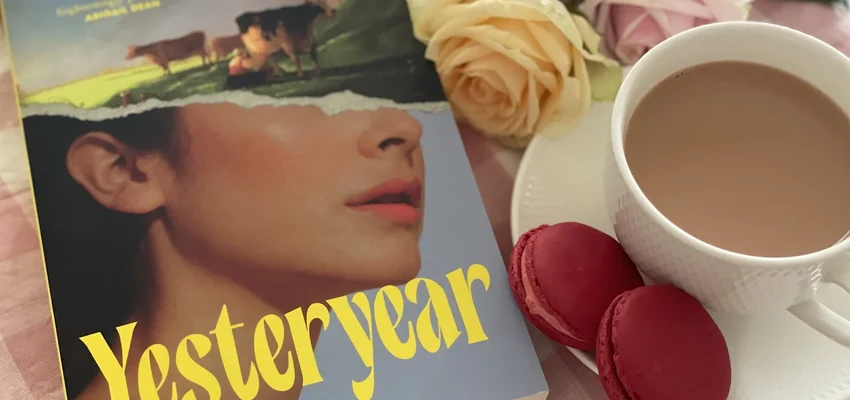
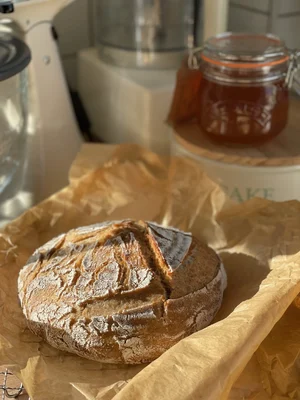
When I first heard that Yesteryear was a novel about trad wives, my eyes rolled so far back into my head that I’m surprised they ever returned. I had absolutely no desire to read it. Nor, if I’m being honest, did I have any particular desire for my husband’s hard-earned money to contribute to the author’s royalty payments. (You’re welcome, Ms Burke - my husband has now put bread on your table too. I trust it was artisanal sourdough!?)
To my horror, after watching the book climb the charts and fielding repeated requests from journalists asking for my thoughts, I reluctantly accepted that I was going to have to read the thing.
After all, it’s generally wise to understand a subject before commenting on it. A radical concept these days, I know.
There’s an old saying about knowing your enemy, and while I wouldn’t go quite so far calling Burke that, I approached Yesteryear with a healthy degree of scepticism and more than a few eye-rolls. Nevertheless, I was determined to give it a fair hearing. It’s only right to walk a mile in someone’s shoes before passing judgement. Good criticism requires understanding, not assumption.
Unfortunately, as this book repeatedly demonstrates, not everyone shares that philosophy.
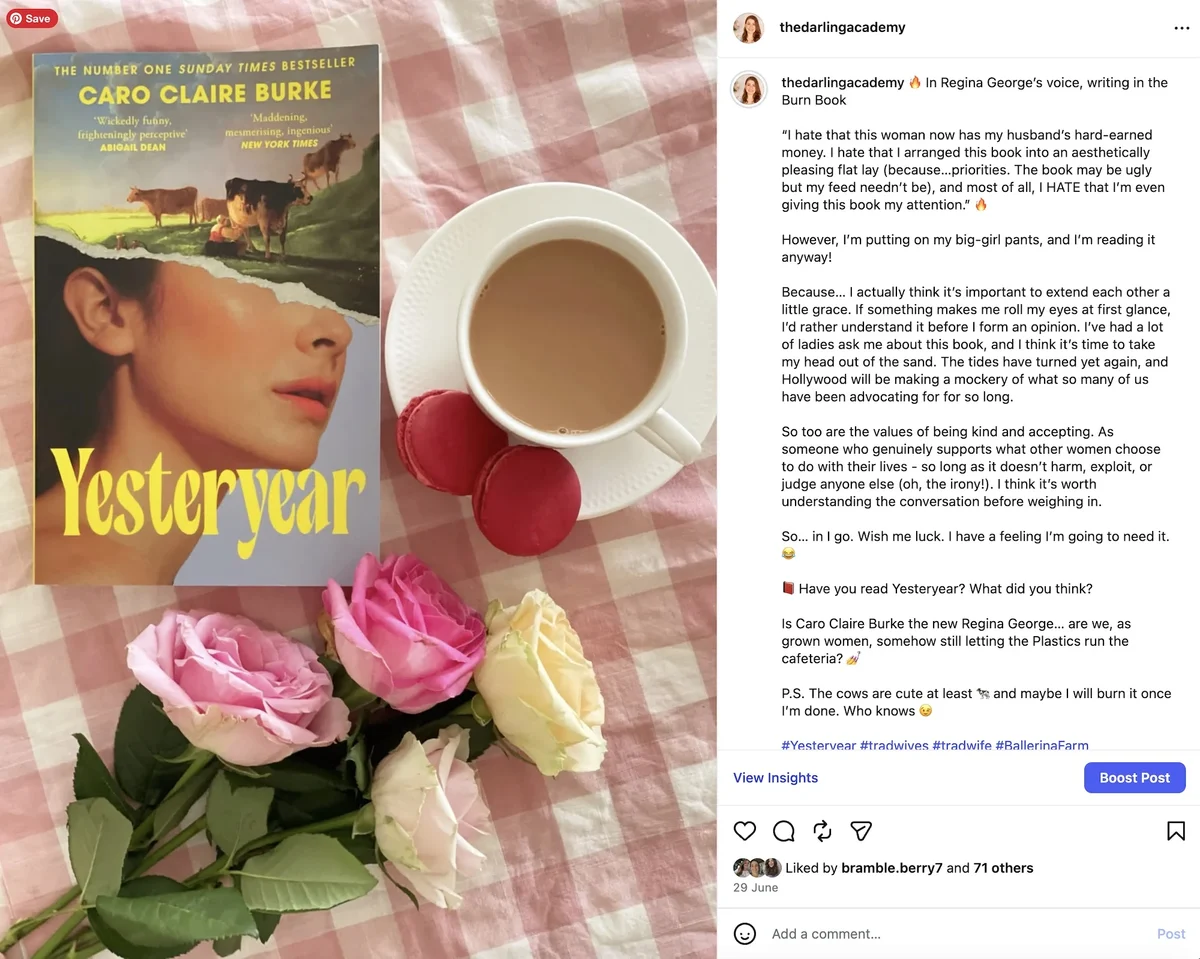

Before we begin, and just in case you’re new here, a brief introduction is probably in order.
I consider myself a trad wife. In fact, I’ve spent the better part of the last decade writing about homemaking, marriage, femininity, and traditional living, and I have played no small role in bringing the modern trad wife conversation into the mainstream.
This isn’t a Martha Stewart-style blog that tells you how to fold fitted sheets or organise your pantry. It’s a blog that explores why these things matter. Why women are choosing homemaking. Why traditional marriage still appeals to some people. More often than not, it’s an apologist’s blog that discusses how, in an age of supposed endless choice, so many women who deliberately choose a more traditional path are openly mocked, misrepresented, and made to feel guilty about it.
Since 2019, I have found myself in the somewhat bizarre position of acting as an unofficial spokesperson for a movement I never expected to become a cultural talking point. I’ve spent years defending myself and other traditional women in newspaper articles, documentaries, podcasts, television programmes, and countless online debates. I’ve seen every stereotype, every lazy assumption, and every tired accusation imaginable.
Which is precisely why I am deeply suspicious of books like Yesteryear.
Before I opened the page, I already knew in my heart how traditional women would be portrayed in this latest wave of fiction. Was I optimistic? Not particularly. By this point, I am well acquainted with how women like me are viewed by the media, which is largely why I continue to write about the subject at all.
Still, I approached the book with an open mind. A decision that, as you’ll soon discover, was not entirely rewarded.
Fair warning: there may be spoilers in this review
What Yesteryear gets wrong about Traditional Women
Yesteryear wants to be a cautionary tale. The problem is that it isn’t really about traditional women at all. It’s about the stereotypes people project onto traditional women.
And that distinction matters.
The modern trad wife has become a cultural obsession. Depending on who’s telling the story, she’s either a victim, a villain, a curiosity, or a threat to feminism itself. Rarely, however, is she allowed to simply be a woman making choices about her own life. This is where Yesteryear falls spectacularly short. Its antagonist main character, Natalie, is supposedly a trad wife, yet almost everything about her feels disconnected from the traditional women I’ve known over the years. The women I speak to online, the women who write to me privately, and the women quietly getting on with their lives without a social media following in sight.
My issue isn’t that Natalie is deeply flawed - flawed characters are, in fact, often the most compelling in literature. Nor do I believe traditional women should only ever be portrayed as cheerful, saintly paragons of virtue either. My issue is that Burke has sold this novel and the inspiration behind the creation of Natalie as a trad wife, while writing a character and plot that embodies almost none of the values that attract women to traditional living in the first place.
The result is so wildly off-target that I found myself snort-laughing my way through entire chapters. Natalie is rigid, frigid, judgemental, self-absorbed, and almost entirely detached from the emotional needs of the people around her. She uses religion as a shield for her worst impulses, judges others mercilessly, mocks her husband, and seems more interested in controlling people than caring for them.
There is none of the nurturing spirit that lies at the heart of homemaking. Because contrary to popular belief, traditional living is not centred on power, submission, or social media aesthetics. It is centred on service. Not servitude, or subservience. Service!
 It is a life spent caring for others. Remembering birthdays, making meals, nourishing the hearts and bodies of your family, noticing when someone in your circle is struggling. Creating stability, comfort, and welcome for the people you love…
At its best, traditional living is not self-obsession but self-giving. Natalie, meanwhile, appears trapped in a permanent relationship with herself. Her marriage bears little resemblance to the traditional marriages I have encountered over the years. She dismisses her husband, writes him off, holds him in low regard, and treats him with a level of contempt that seeps through almost every interaction they have.
Then there are the children. Natalie has a sexless marriage, and repeatedly impregnates herself with a turkey baster because her father-in-law is obsessed with producing “the perfect American family.” She speaks of herself less like a wife and mother (unless it’s for likes online), and more like livestock being entered into a county fair. Yet despite actively pursuing pregnancy, she appears to dislike children, resent motherhood, loathes pregnancy, and finds the everyday needs of her own family deeply irritating.
Make it make sense.
By the end, one is left wondering what exactly is supposed to be “traditional” about any of this. Natalie doesn’t appear to value marriage. She doesn’t appear to enjoy motherhood. She doesn’t seem particularly interested in homemaking, family life, or even the people she claims to love.
So if a character shares none of the values, priorities, motivations, or relationship dynamics commonly associated with traditional living, then in what meaningful sense is she a trad wife at all? The answer, I suspect, is that she isn’t.
She’s not a trad wife. She’s a trad wife stereotype.
And that’s a problem, because many readers won’t recognise the difference.
They’ll assume Burke has accurately captured a movement she appears to have observed largely from the outside. They’ll mistake caricature for reality. Which, ironically, is exactly the kind of prejudice the novel claims to be exposing.
Yesteryear was poorly researched, but I don’t blame Burke
If Caro Claire Burke truly spent as much time researching traditional women as she claims, then I can only assume she confused research with scrolling Instagram.
The entire portrayal feels assembled from headlines, TikToks, and think pieces written by people who have never actually spoken to the women they’re describing. It’s all surface-level observation masquerading as insight. Rather than going to the source, Burke appears to have fallen into the same trap as countless journalists, commentators, and culture critics before her: mistaking the loudest examples for the most representative ones.
Her inspiration seems to come not from traditional women, but from women performing a highly marketable version of traditional womanhood online. Burke, like many others have fallen for the clever marketing of some influencers, who co-opted a cause for material gain. Blindly believing that a “Trad Wife” was nothing more than the woman who discovered that prairie dresses, sourdough starters, and carefully curated kitchens generate clicks, engagement, and sponsorship deals. As readers of this blog will know, I’ve been banging this drum for the last few years.
The problem is that public conversations about traditional women have become hopelessly fixated on aesthetics. The trad wife has been reduced to a collection of visual props and internet clichés.
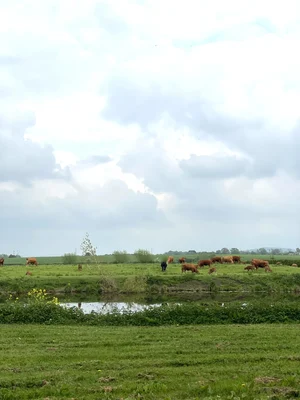 A linen dress, a loaf of sourdough. A farmhouse sink, a dozen children. Oh and don’t forget the cow or flock of chickens somewhere in the background!
These images have become so dominant that many people now mistake them for the movement itself. They are not.
I am a suburban woman. I have never milked a cow in my life. I do not live on a ranch. My days, like those of all housewives, are filled with school runs, meal planning, grocery shopping, church activities, household management, family responsibilities, and the thousand small acts of care that make a home function well.
My life looks considerably less like Little House on the Prairie and considerably more like every other busy family trying to get through the week.
The truth is that a prairie dress + a loaf of sourdough + a large family + a homestead does not equal a trad wife.
The equation simply doesn’t balance, and if Burke genuinely believes it does, then she’s every bit as bad at mathematics as she is at research. She was looking at the wrong women all along.
The thing she got wrong above all, is that Natalie hates her husband. That immediately disqualifies her from the party.
I know Yesteryear is ’just a story,’ but what frustrates me is how readily people will accept fiction as fact, my own inbox, and comment section you see on these women’s profiles is enough to prove that! Our generation’s media literacy is at an all-time low, practically rock bottom from what I’ve personally witnessed in recent years. Headlines are not always the truth, people!
The likes of Ballerina Farm, Nara Smith, and a handful of other highly visible internet personalities have become the public face of traditional womanhood, despite the fact that they are not representative of most traditional women at all. They’ve never really claimed to be.
Most trad wives are living remarkably ordinary lives. They’re managing households, raising children, supporting their families, volunteering at church, balancing budgets, planning meals, and trying to plan what’s for dinner. They’re not building lifestyle empires, selling raw milk, or living on sprawling ranches. All power to these business women in milkmaid dresses, but they show up to sell products.
And in the world of modern media - ordinary women don’t generate clicks. Extraordinary “examples” do.
That’s why the media fixates on influencers, and why novels like Yesteryear invent characters like Natalie. They’re more profitable than reality. They’re easier to sell, easier to sensationalise, and easier to turn into a moral panic. And every time you click, outrage-share, hate-read, or quote-tweet one of these stories, somebody gets paid. In this case, Burke, and in due time Anne Hathaway, who has already picked up the movie rights to the book.
The cultural double standard against Traditional Women
In all honesty, if I separate myself from the “cause” I write about here, and take it back to the root of how I truly feel as an individual - the more I read Yesteryear, the less it felt like a novel about traditional women, and the more it felt like a novel written by someone deeply suspicious of women who choose faith, family, and domestic life.
Natalie doesn’t feel like a real person. She feels assembled from media talking points, cultural anxieties, and every headline written about Hannah Neeleman, Ruby Franke, and the internet’s favourite trad-wife-esque boogeymen.
But what interested me most about this book wasn’t Natalie or the plot herself. It was what her character revealed about the culture that created her.
For decades, we’ve been told that feminism is about choice. The choice to pursue a career, to remain child-free, to marry or not, and to define success on one’s own terms. Most of us would agree those freedoms are worth protecting. What, exactly, is so scary about a woman choosing something that doesn’t align with the current cultural standard?
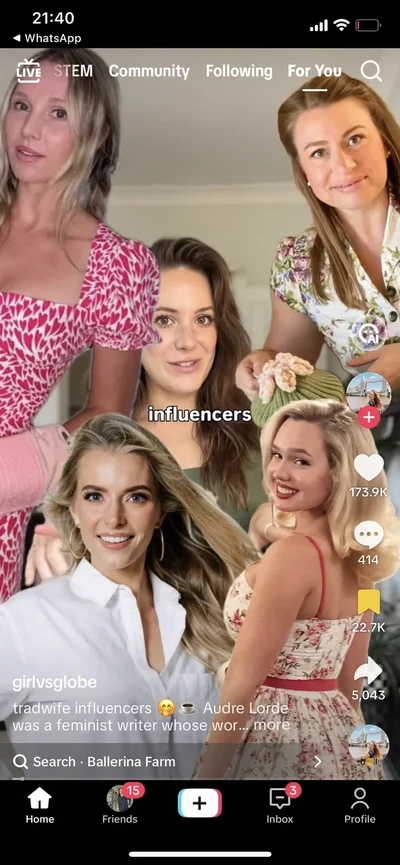 The Boogeywomen…
We need to look deeper at this curious thing that happens when a woman chooses home, her children, and her husband as her focus. So what if she shares that passion? A man who works in finance and loves fishing, then shares his catch online doesn’t get slated for it. A woman who also works in finance and shares finance tips online? She doesn’t either.
A woman who stays home, and shares tips online in accordance with her lifestyle? SUDDENLY SINISTER!!!
I get why, and I also appreciate a woman who dedicates herself to a demanding career, and is applauded for her ambition (rightly so). Yet, a woman who devotes the same energy to raising children, running a household, supporting her husband, and building a family culture (and dares to talk about it to those beyond her immediate circle) is often met with suspicion. The question is rarely asked outright, but it lingers beneath the surface of every conversation: Why would she choose that? How dare she speak about the fulfilment and purpose she has discovered for herself.
In that moment of questioning, “choice” starts to look suspiciously conditional. Like she’s done it to rub other women up the wrong way? I promise you ladies, my choice to live this life has nothing to do with you. Trad Wives like myself only ever went online to talk to each other. You just invited yourself in, however we’re happy to feed you if you’re hungry? Please don’t comment on how we run our home, you’re just a guest here. Remember that!
The overarching question I continue have this is: If women are genuinely free to determine the course of their own lives, then that freedom must include choices that other people do not personally admire, understand, or want for themselves - or even think relevant to them. Otherwise, we haven’t escaped social expectations at all. We’ve simply exchanged one approved script for another.
If women are genuinely free to determine the course of their own lives, then that freedom must include choices that other people do not personally admire, understand, or want for themselves - or even think relevant to them. Otherwise, we haven’t escaped social expectations at all. We’ve simply exchanged one approved script for another.
The contradiction becomes even more apparent when traditional women achieve success beyond the home. Many of the women who attract public attention today are not simply homemakers. They are authors, entrepreneurs, educators, content creators, and business owners whose work is often rooted in the very homes and families they care for. Yet the moment a woman builds something successful around homemaking, she is accused of being inauthentic. She is somehow too ambitious to be a housewife and too focused on home to be taken seriously as a businesswoman.
Which is it?
I’ve heard these criticisms myself for years. “She’s not really a housewife, she has a blog.” “She’s not really a homemaker, she’s written books.” As though women throughout history never combined domestic life with productive work. As though homes were never places of industry, enterprise, management, and economic activity. Women have always balanced family responsibilities with meaningful work. The idea that these things are somehow incompatible is a surprisingly modern invention.
Perhaps that is why books like Yesteryear miss the point. The problem isn’t that traditional women are contradictory, the problem is that our culture still struggles to accept that some women might freely choose a life centred around home, family, faith, and marriage and find genuine fulfilment there. They may even manage to find time within the rhythm to do something creative, so why begrudge her for it?
Womanhood and all its complexities aside, what I found most disappointing was the novel’s treatment of Christianity and the Biblical understanding of what it means to be a woman.
For many traditional women, faith is not an accessory to the lifestyle; it is its very foundation. The desire to serve one’s family, honour marriage, practise hospitality, contribute to one’s community, embrace motherhood if called to it, and cultivate a peaceful home often flows from deeply held spiritual conviction. It is not a pursuit of power or status, but one that requires a great deal of humility. Let’s not forget that it also largely stems from knowing that we cannot do it all under our own steam!
To understand traditional women, one must first understand that many of them genuinely believe in and desire these things for their lives. Yet contemporary fiction often struggles to engage with faith and spiritual belief on its own terms. Christianity is frequently portrayed in secular media as restrictive, oppressive, naïve, or psychologically suspect. Rarely is it presented as a sincere source of meaning, purpose, and joy, particularly for women.
As a result, novels that set out to explore traditional womanhood often end up examining caricatures rather than people.
Perhaps that is why Yesteryear left me feeling not only unsatisfied, but unsettled. Are women like Burke so convinced of our resentment and an apparently underlying repression that they cannot imagine we might be content? So certain of their own suspicions that they assume we must share them? Natalie’s worldview is saturated with bitterness, cynicism, and contempt, yet these qualities seem to be presented as an inevitable consequence of traditional values rather than the traits of an individual character.
Nasty women exist just as much in a secular world…
The novel is marketed as a thriller, yet beneath its sensational plot I found something far more ideological. What emerged was not merely a critique of traditional women, but a deep suspicion of the values that often underpin their lives: faith, marriage, motherhood, domesticity, and the belief that these can be meaningful and worthwhile pursuits.
It’s deeply disturbing to me too that they cannot be shared with joy, or taught online to others who may simply like that kind of content!?
Again and again, Christianity is not presented as a source of joy, wisdom, purpose, or conviction, but as something restrictive, irrational, and faintly sinister. The women who embrace it are not approached with curiosity, but viewed through a lens of scepticism, as though their beliefs require diagnosis rather than understanding.
I’m not talking about Natalie here, I am talking about the women that “inspired” the novel.
That is what ultimately left a sour taste in my mouth. Not because I expected the novel to agree with me, but because it seemed so uninterested in understanding the women it was writing about.
A good novel asks questions. A great novel challenges assumptions. Yesteryear often felt as though it had already made up its mind.
Yesteryear is deeply anti-woman, and exploitative!
What’s troubling about Yesteryear is not that it disagrees with women like me. Disagreement is fine. Criticism is fine. However, if you’re going to take aim at a movement, at least have the decency to understand it first! Caro Claire Burke has only taken inspiration from, really, “influencer culture”, and not Trad Wives themselves.
What bothers me the most is that the novel seems determined to cash-in on traditional women while simultaneously misunderstanding them. It borrows our language, our aesthetic, our lives, and our cultural relevance, then serves up a caricature so absurdly detached from reality that it borders on parody.
And therein lies the irony.
We are constantly told that feminism is about empowering women to choose their own path. Yet when some women choose marriage, motherhood, homemaking, faith, and a life centred around family, they are treated not as autonomous adults but as curiosities, victims, villains, or punchlines. Worse still if they dare to share what they love, and have learned from this life.
There is something profoundly misogynistic, and exploitative, about that. Would they rather us shut our mouths and come offline?
The plot of the book isn’t what is actually sinister, it’s the premise of the book itself, and it feels somewhat misogynistic profiting from the women you clearly neither respect, nor understand. The ones you wish to silence through mockery.
Traditional women like me, and those who frequent our communities online have become a lucrative cultural commodity. We generate headlines, documentaries, think pieces, podcasts, and now novels. People build careers dissecting us, making money (poorly) explaining us, and packaging us up for public consumption just to invite everyone to gawp at the strange creatures in the enclosure.
The joke, however, is that many of these commentators are no more interested in actual traditional women than a safari hunter is interested in conservation. We are just content. We are entertainment. We are a convenient vehicle for someone else’s advancement.
That, to me, is the real story here:
Not a trad wife held hostage and sent mad by her beliefs, but a modern culture that cannot stop exploiting women whose choices it professes to despise.
Burke has kind of proved my point about influencers cashing in on the Trad Wife movement, but I can’t shake the feeling that the book meant less about exposing the influencer lie, and more about the values of the Trad Wives, and Christian women themselves. That’s the knife she truly has stuck in.
In four words?
Yesteryear is a cheap shot.
(but well done Caro Claire Burke, you had a dream and you pursued it - I stand in solidarity with you for that. I’m just sad it had to come at some other women’s expense).
I'd love to know your thoughts...
Did you enjoy Yesteryear? How did it make you view the world, the evolution of women’s choice, and did it hit the mark you thought it would? It felt like a cheap beach read to me, hardly profound, or beautiful in its prose. Is that a sign of our waning respect for good writing? Is it a war on beauty and culture if these type of books constantly hit the bestseller lists.
Are our choices of entertainment determined to me cheap and toxic forevermore? Oh, and will you be watching the movie? I certainly will…
Let me know in the comments below (but please, keep them respectful - we are a well mannered house here).
If you like our values here at The Darling Academy and would like to support the blog, then please consider buying me a coffee via Ko-Fi. It helps keep the proverbial sourdough starter fed! ;)
This article is filed in: General, Traditional Values & Lifestyle, Femininity
All content and images in this article are copyright of The Darling Academy and are not to be shared or reproduced without our express permission.
Leave a Comment
This policy contains information about your privacy. By posting, you are declaring that you understand this policy:
This policy is subject to change at any time and without notice.
These terms and conditions contain rules about posting comments. By submitting a comment, you agree with these rules:
Failure to comply with these rules may result in being banned from submitting further comments.
These terms and conditions are subject to change at any time and without notice.
Comments