
We tried a 1940s Ministry of Food mock Chocolate Spread recipe
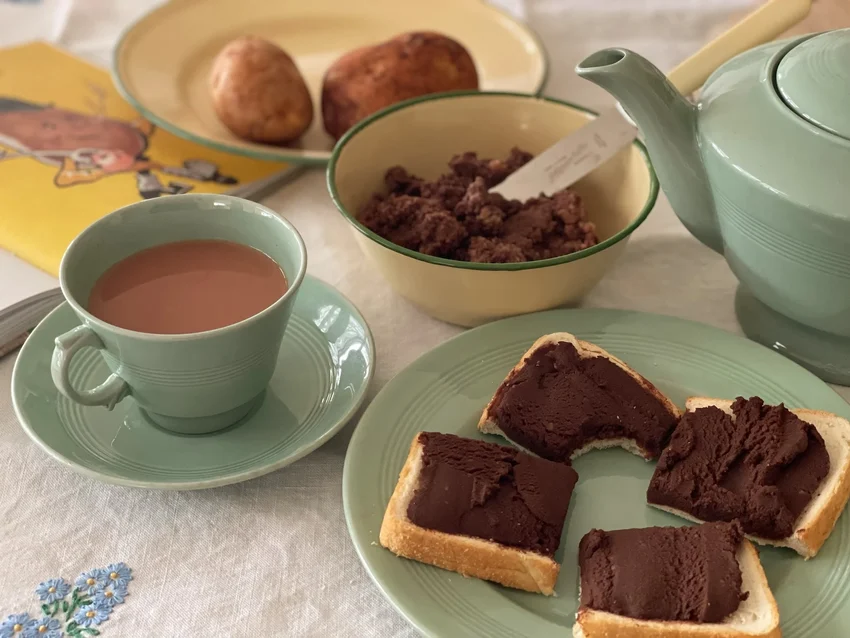
With sugar rationed, chocolate in short supply, and imported ingredients increasingly difficult to obtain, British housewives during the 1940s - and well into the 1950s - found themselves challenged to satisfy their families’ sweet tooth with whatever they had on hand. The Ministry of Food responded by publishing countless recipes designed to make scarce ingredients go further, encouraging women to embrace substitutes and experiment with unlikely combinations.
As a result, wartime kitchens produced an array of surprisingly creative desserts and confections. Carrot ‘fudge’, eggless cakes laced with vinegar, mock marzipan, and chocolate-flavoured treats made from vegetables all appeared in recipe leaflets and cookery demonstrations. While these recipes may seem unusual (and unappetising today), they reflected the ingenuity and determination of a generation who refused to let rationing completely deprive them of life’s little pleasures. That’s why I find the “make do and mend” era so fascinating and inspiring. Such a time for necessary creativity.
Many people assume that chocolate spread began with Nutella, but sweet chocolate spreads existed long before the famous Italian brand was created. Before the war, chocolate and cocoa-based sandwich spreads could already be found in Britain and elsewhere, providing an affordable way to enjoy a chocolatey treat. In the late 19th and early 20th centuries, various chocolate and cocoa-based sandwich spreads were sold in Europe and North America. Some were marketed as chocolate creams, cocoa spreads, or chocolate pastes. Often made from cocoa, sugar, fats, and sometimes milk, they were intended to be spread on bread as an affordable alternative to chocolate bars.
However, wartime shortages forced both manufacturers and homemakers to become even more creative in their efforts to stretch precious cocoa supplies.
In fact, the same spirit of ingenuity that inspired Britain’s wartime chocolate spread would later contribute to the creation of Nutella itself. In post-war Italy, confectioners combined limited cocoa with locally abundant hazelnuts to make the ingredient go further. In Britain, housewives often turned to vegetables instead. One particularly fascinating example was a chocolate spread made from mashed potato, cocoa powder, and sugar.
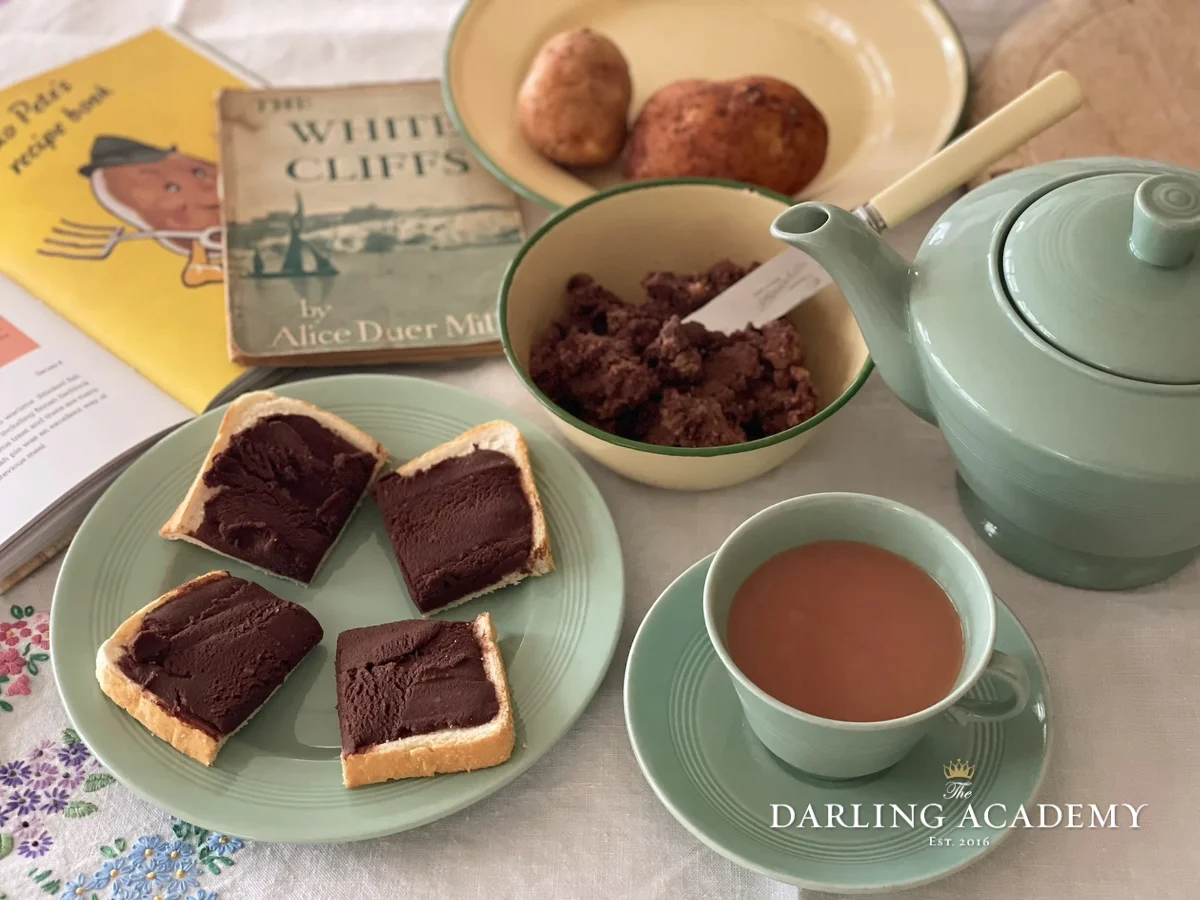
I first learned about this recipe from a wartime re-enactor, and, as a family with a deep love for a chocolate spread treat, I have been very curious to discover whether this unusual combination actually worked (or even tasted nice)! So I decided to recreate the recipe for my unsuspecting family, YouTube channel and experience a small taste of wartime Britain for myself.
I tried a 1940s mock Chocolate Spread
The outbreak of war in 1939 transformed daily life in Britain and imported food became increasingly scarce as German U-boats targeted merchant ships bringing supplies to the country. My husband’s Grandfather was a Commander in the Royal Navy fighting these U-boats and we know first hand it was incredibly dangerous work! “Chocolate spread” wasn’t exactly at the top of the critical-goods list, or worth losing life and limb for.
While they had many successes and kept Britain sustained, the loss of supplies for the island nation had a terrible impact on the availability of the supermarket goods we now take for granted.
In response to these great shortfalls of consumer goods, the government introduced rationing and launched extensive campaigns to help families make the most of what they had.
At the centre of these efforts was the Ministry of Food, a government department tasked with ensuring the nation remained fed despite severe shortages. Rather than simply issuing rations, the Ministry actively educated the public, particularly housewives, on how to prepare nutritious and economical meals using very little. Through leaflets, radio broadcasts, demonstrations, recipe booklets, and posters, the Ministry of Food encouraged women to stretch ingredients, avoid waste, and embrace alternative foods that could be grown or sourced locally.
The IWM website is a really great resource if you want to learn more about food history on the Home Front, start here. Many of the recipes developed during this period will sound unusual to modern ears, but they reflected a determination to keep families healthy while making every ingredient count.
Who was Potato Pete in WW2?
No discussion of wartime cooking would be complete without mentioning Potato Pete. Created by the Ministry of Food, Potato Pete was a cheerful cartoon character whose mission was to persuade the British public to eat more potatoes. Potatoes were not rationed and could be grown domestically, making them an ideal substitute for foods that were in short supply.
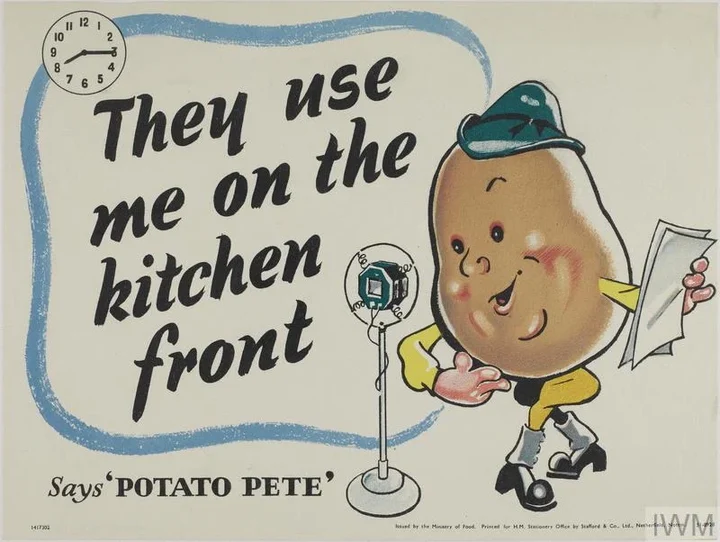
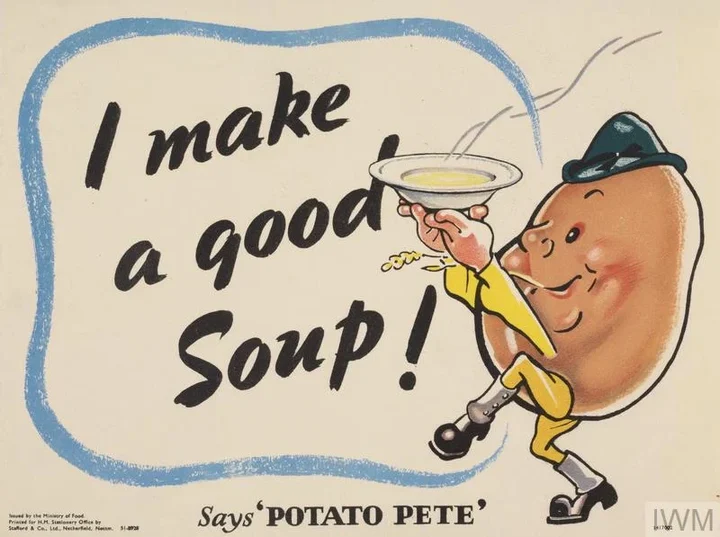
Potato Pete appeared on posters, recipe leaflets, and educational materials throughout the war, and his message was simple: potatoes were versatile, filling, nutritious, and patriotic!
The Ministry of Food encouraged families to use potatoes in countless ways, from cakes and pastries to soups and puddings. Unsurprisingly, potatoes even found their way into sweet spreads such as the one I made. Alongside Potato Pete was his female counterpart, Dr Carrot, who promoted the health benefits of carrots. Together they became some of the most recognisable faces of Britain’s wartime food campaigns.
Utility Jude and Home Front food history
One of my favourite modern interpreters of wartime domestic life is Utility Jude, whose work helps bring the experiences of ordinary British families during the war to life via her YouTube channel and demonstrations at 1940s events.
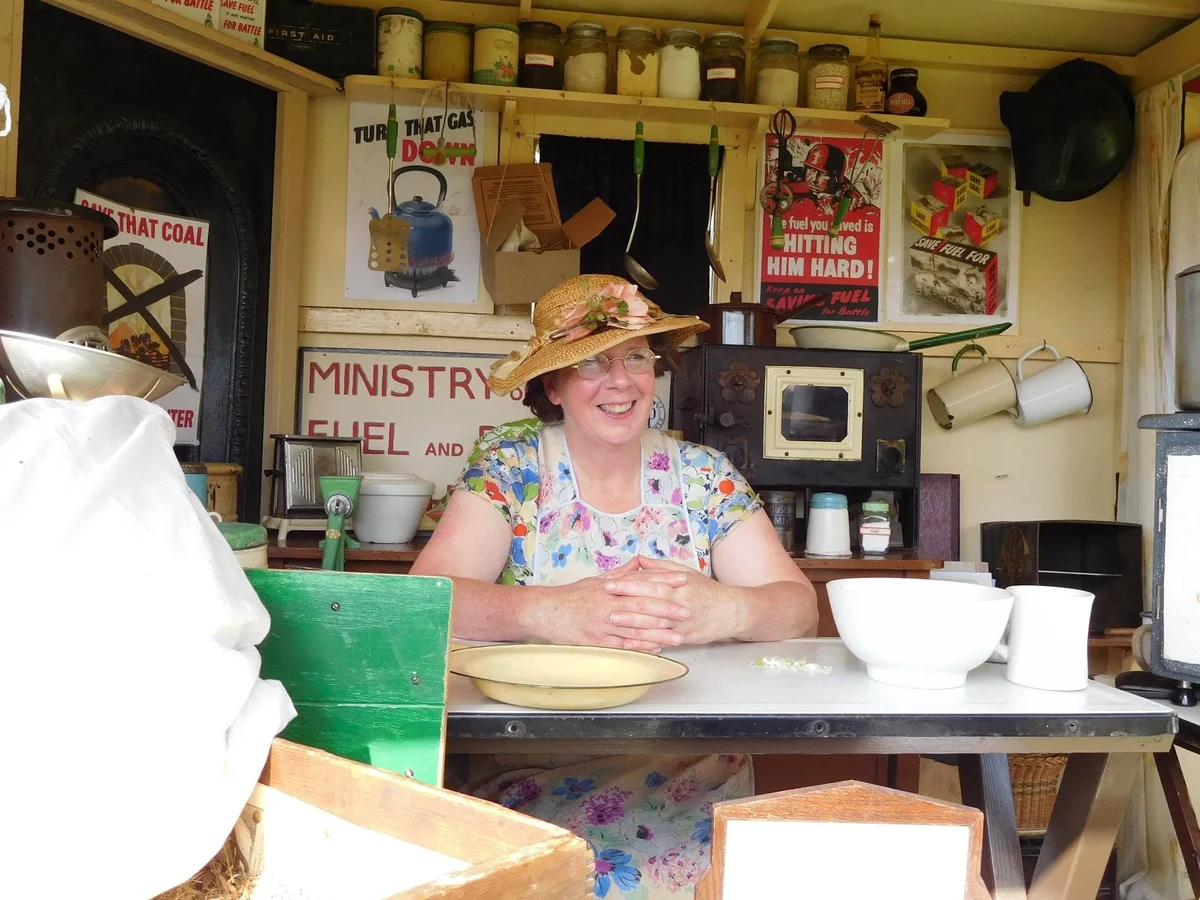 Utility Jude c/o Lee Sinatra
Through her research and recreations of Ministry of Food recipes, Utility Jude demonstrates, completely in character, the ingenuity required to run a household during the 1940s. If you have a love for wartime and midcentury domestic life like I do, I think you’ll love her! The Utility Jude Facebook page is a great resource too.
What I particularly appreciate about her channel is how these historical recipes remind us that homemaking has always involved creativity, resilience, and adaptability. The women of the war years were masters at transforming humble ingredients into something nourishing and enjoyable. In fact, I think we are still capable, it’s a job that demands it - and we should be incredibly grateful that we don’t have to exercise these muscles all the time. How incredibly lucky we are ladies!

Wartime Chocolate Spread recipe
The recipe itself is wonderfully simple. I have estimated the quantities, as it really is a “taste as you go” recipe. In true wartime spirit, use leftover mashed potato!
Ingredients for WWII Chocolate Spread
- 2-3tbsp mashed potato
- 1 tbsp sugar
- 1 tbsp cocoa powder
- a few drops of Vanilla (optional)
How to make 1940s Rationing Chocolate Spread
- Cook and mash the potatoes until completely smooth.
- Allow them to cool slightly.
- Stir in the sugar and cocoa powder.
- Mix thoroughly until a smooth, spreadable consistency is achieved.
- Spread on bread, with margarine if preferred.
* Can be stored in the refrigerator and use within a few days.
That’s it!
No butter. No cream. No hazelnuts. Just three ingredients that many wartime households would have had available. It’s also plant-based, and vegan.
What does mock chocolate spread from the 1940s taste like?
The cocoa and sugar largely disguise the potato flavour, creating something closer to a rich chocolate frosting or thick chocolate paste than a modern chocolate spread. The texture is slightly different from what we’re used to today, but it’s remarkably pleasant considering its humble origins.
More than anything, tasting it offers a direct connection to the past. It allows us to appreciate the creativity and determination of a generation who learned to make something special from very little. As my son said, he’d eat it in a pinch, or if going through a war. I’m pleased he agreed to take part as activities like this are quite educational for children!
Why 1940s ration recipes are still relevant today
There is a growing interest in wartime cooking, and it’s easy to understand why. These recipes tell stories about resilience, community, and resourcefulness. For modern homemakers, they also serve as a reminder that good food does not always require expensive ingredients. The women who lived through the Second World War possessed skills that are increasingly valuable today: thrift, adaptability, and an ability to make the most of what was available.
Whether you’re interested in food history, British social history, or simply curious about unusual recipes, this wartime chocolate spread is a fascinating recipe to try.
It probably won’t replace your favourite chocolate spread, but it offers a delicious lesson in how previous generations managed to find sweetness even during some of the most challenging years in modern history.
With love,

Would you like to see more ration recipes like this?
Click here to see the other 1940s and vintage recipes I have recreated so far.
Have you ever tried a wartime recipe? I’d love to hear which historical dishes you’ve recreated in your own kitchen, or leave a comment below and tell me what you’d like to see recreated next on my blog and YouTube channel next?
This article is filed in: 1940s Wartime & Ration Recipes, General, Vintage & Traditional Recipes
All content and images in this article are copyright of The Darling Academy and are not to be shared or reproduced without our express permission. Image of Utility Jude c/o her Facebook page. Potato Pete images courtesy of IWM.

Leave a Comment
This policy contains information about your privacy. By posting, you are declaring that you understand this policy:
This policy is subject to change at any time and without notice.
These terms and conditions contain rules about posting comments. By submitting a comment, you agree with these rules:
Failure to comply with these rules may result in being banned from submitting further comments.
These terms and conditions are subject to change at any time and without notice.
Comments